


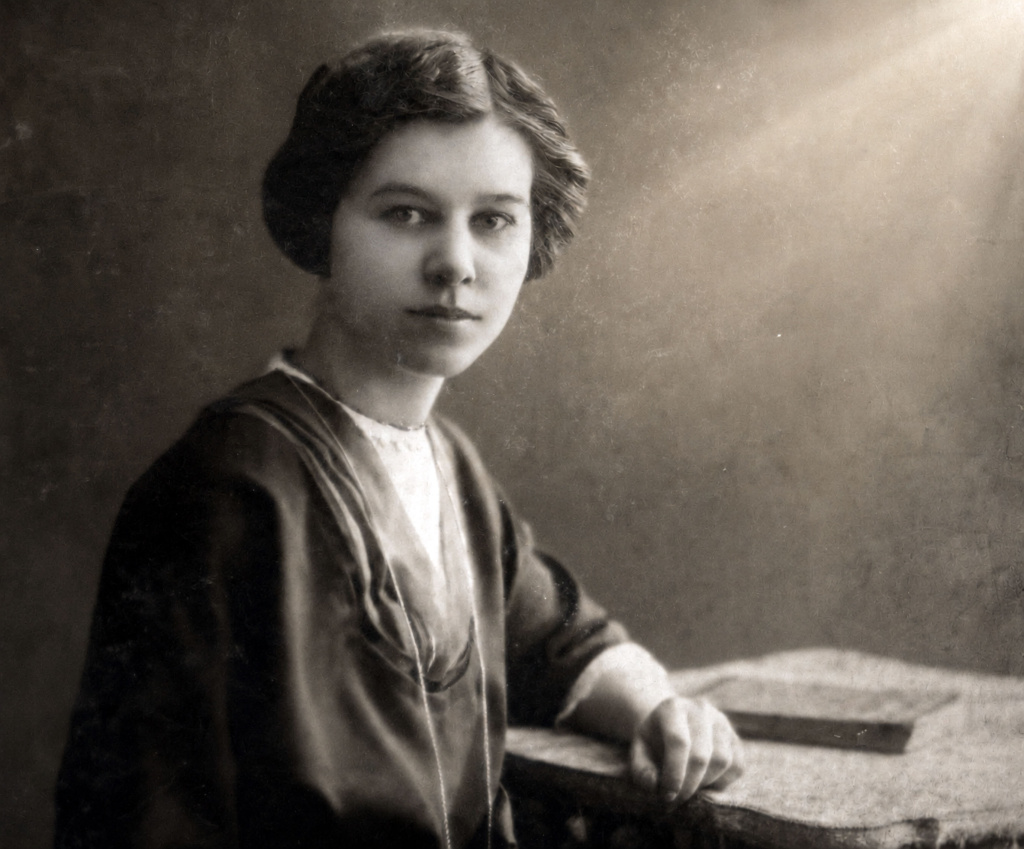
At one of the spring 2026 auctions, the Hungarian Heritage Archives Foundation purchased a small noble family archive contained in a banana box. It became clear already during the preliminary inspection that the completely unarranged collection could hardly be described as “sensational.” Nevertheless, we considered it worthy of preservation because of its significance for local history. Following the successful bid, however, one surprise followed another. What had begun as a banana box full of documents ultimately developed into a “document rescue pilot project.” In the following pages, the reader will find an account of the archive and its history, the investigation into its former owners, and, through the search for documents removed from the archive, an illustration of the differing perspectives of the art market and public collections.
The “Hunt” for the Documents
At the auction in question, the Foundation purchased two lots. The first was the small archive described above, which at first glance appeared to be the family archive of the Péterffy family, a lesser noble family from Nemesgulács in Zala County, today part of Veszprém County. Closer examination, however, revealed that it also contained certain papers of their relatives, the Eőry family, as well as individual written records relating to several other noble families of the Balaton Highlands. The second acquisition was a manuscript volume of nearly seven hundred pages dating from the eighteenth century, consisting chiefly of two sets of minutes relating to the decades-long litigation over the division of the Kisfaludy family estates, to which several charters concerning entirely unrelated matters had subsequently been attached with thread. From the twentieth-century “bookmarks” inserted into the volume (one bearing the name Péterffy) and from the contents of the attached charters, it soon became clear that the two lots had originally belonged together. Indeed, there can be little doubt that the volume had been removed from the banana box in order to be sold separately. At this point we began to suspect that further lots offered at the auction might also have been separated from the box containing the archive. Using the auction catalogue, this suspicion was quickly confirmed: we identified a further ten lots that were clearly connected with the Péterffy, Eőry, and Dobosy families, the last of which appeared both in the banana box and in the manuscript volume.
This illustrates particularly well the entirely understandable difference in perspective between, on the one hand, public collections and historical researchers, and, on the other, commercial interests. For archives, as well as for local and family historians, the essential consideration is that an archival collection should remain intact and be available for research in one place—not only because this facilitates research, but also because, beyond the literal contents of the documents themselves, their relationship to one another conveys a wealth of additional information, the principle known as archival provenance. By contrast, private owners and collectors who place archival material on the market, together with the auction houses responsible for its sale, are naturally interested in achieving the highest possible financial return. For this reason, they frequently divide collections into individual lots and attempt to sell the documents separately, thereby risking the permanent loss of information relating to their archival provenance. The more extensively an archive is divided into separate lots, the greater the likelihood of attracting buyers willing to place higher bids—and the more completely the once coherent archival
collection is dispersed.
We therefore realised too late that, in order to preserve the integrity of the archive, we should also have bid on the additional lots. Some damage limitation nevertheless proved possible. Two of the twelve lots remained unsold at the auction, enabling us to purchase them afterwards at the opening price. Fortune also favoured us: three further lots had been acquired by a private collector known to us who, having learned that the documents originally belonged together, generously donated them to the Foundation. After reuniting these seven lots, we proceeded to arrange the archive. As for the remaining five lots—that is, five documents—we can only hope for the generosity of their present owners, should this article ever come to their attention. For the time being, our knowledge of their contents is limited to the one-sentence descriptions provided in the auction catalogue.
It is worth asking according to what principles these documents were selected for separate sale. Naturally, those items that appeared particularly attractive in either form or content were offered individually, although in this case the archive contained no truly exceptional pieces—such as medieval charters or original grants of arms—that might have attracted particularly high prices. The manuscript volume was undoubtedly the most valuable item in the collection, if only because of its size. In addition, the older documents (including the earliest, dating from 1596), original or contemporary copies of title deeds and other legal instruments (seventeenth to nineteenth centuries), minutes of meetings of common landholding associations (though not all of them), records of an inventory character (accounts and probate inventories), and finally a French-language document issued by the Belgian Embassy in Budapest in 1947 were all separated from the archive. According to the publicly available information, the twelve lots had a combined opening price of HUF 204,000 and were eventually sold for HUF 250,500, indicating that they attracted only modest interest. Although the overwhelming majority of the documents remained in the banana box, the former noble family archive would have lost its most valuable pieces. This regrettable loss of archival integrity may serve as a reminder to owners of historical documents that, if they are concerned about the future of the archival material they have inherited or otherwise acquired, they should seek a solution that allows the collection to remain intact. As a first step, they should consider presenting the archive to a public collection or contacting the Hungarian Heritage Archives Foundation, which will gladly assist in finding the solution best suited to the owner’s circumstances. Only if neither the institution approached nor the Foundation is able to help should they turn to an auction house.
Who Owned the Archive?
Following a more thorough examination of the archive, it became evident that the collection acquired its present form during the lifetime of Franciska Péterffy, wife of Ferenc Hegedüs (1879–1961). As the eighth child of a lesser noble family from Nemesgulács, she presumably inherited all or part of the family archive preserved by her father, Gábor Péterffy. In a letter written in 1908, one of her distant relatives, Ervin Péterffy, who lived in Pozsony County, almost certainly addressed Gábor with the request that he send him, by registered mail, “the family papers preserved in my elder brother’s keeping,” so that he might further elaborate the family’s genealogy. Ervin had learned from other relatives that Gábor possessed old family documents: “Professor Béla Péterffy of the grammar school in Temesvár wrote to me that family charters in Latin are kept in a sack in your attic, information which he himself received from his own mother. The widow of Bonifác Péterffy, in turn, heard the same from your wife.” Ervin even offered to provide a deposit for the period during which the documents would remain on loan in his possession.[1] Whether this loan ever took place is unknown, just as it remains uncertain to what extent the present archive corresponds to the collection as it existed more than a century ago. Documents may have been removed from the archive on numerous occasions, whether at the time of the proposed loan, following Gábor’s death, or during the six and a half decades after Franciska’s own death. What is certain is that very little survives from the older, pre-nineteenth-century papers of the Péterffy family—if, indeed, Gábor possessed such documents at all. As we shall see, however, the archive was unquestionably enlarged during Franciska’s lifetime.
Throughout her long life, Franciska lived in several places—Badacsonytomaj, Keszthely, Tapolca, Várda in Somogy County, and during the final two decades of her life Szentendre. She became one of the central figures in the Belgian Royal Inheritance Case, discussed below, which attracted considerable attention in the Hungarian press between the two world wars and consequently made her the subject of numerous newspaper articles. One article, published in 1931, remarked that “Mrs Hegedüs … can prove her distinguished ancestry with an entire suitcase full of dogskin charters. Her family tree reaches back to the reigns of Kings Matthias and Sigismund, and she produces authentic documentary proof for every claim from her suitcase.”[2] The last interview with Franciska was conducted in Szentendre in 1948. Describing the family archive, the journalist wrote: “Mrs Ferenc Hegedüs, née Franciska Péterffy, bustles about while our amazement steadily grows. She takes from her cupboard a worn little suitcase wrapped in blue paper and opens it. The peculiar musty smell of ancient documents greets us. It is a veritable little archive. Centuries-old handwritten folios, family papers dating from the age of King Matthias, grants issued during the reign of Maria Theresa, family trees, and records of inheritance divisions emerge one after another.”[3] The article not only portrayed the elderly woman but also reproduced one of the family trees that is still preserved in the archive today. Even if the “family papers dating from the age of King Matthias” may be attributed to journalistic imagination, it is beyond doubt that certain items were removed from the collection at a later date—for example, the reply sent to Franciska by the future Queen Elizabeth II while still heir presumptive, from which the article itself quotes.
Upon Franciska’s death in 1961, the archive passed to her only surviving child, Karolin Hegedüs, wife of Imre Hatvani. Indeed, the latest documents preserved in the collection, dating from 1965, already relate to her.[4] The family lived in Szentendre, at 5 Rab Ráby Square, in a house that also accommodated a candle-making and gingerbread workshop. The business had been established by Franciska’s son, Gyula Péterfi (1903–1957),[5] and after his death was taken over by his niece Gizella Hatvani (†2015) and her husband Ferenc Balogh (1923–1996).[6] Both craftsmen were well-known figures in Szentendre. The machinery of Gyula Péterfi’s workshop, together with the signboard of Ferenc Balogh’s business, is today preserved by the Ferenczy Museum.[7] As among the last representatives of the traditional gingerbread-making craft in Hungary, Balogh and his products continued to appear in newspapers well into the 1980s.[8] Production ceased only upon Ferenc Balogh’s death.[9] It is striking that, with only a few exceptions, their own personal papers are absent from this small archive. We may therefore conclude that what eventually entered the antiquarian market was Franciska Péterffy’s archive itself, rather than an archive subsequently merged with the papers of her descendants—in other words, the contents of the “worn little suitcase.” The joint grave monument of the Péterffy, Hatvani, and Balogh families—where Franciska herself is almost certainly buried—may still be found in the Sztaravoda Road Cemetery in Szentendre.[10]
The Belgian Royal Inheritance and Franciska Péterffy
Following the death of King Leopold II of Belgium (reigned 1865–1909), a remarkable rumour began to circulate in Hungary. It claimed that the king’s wife, Queen Marie Henriette of Belgium (née Archduchess Marie Henriette of Habsburg-Lorraine), who had died seven years earlier and was the daughter of Archduke Joseph, Palatine of Hungary, and Princess Maria Dorothea of Württemberg, had bequeathed an immense fortune to her Hungarian relatives in her last will and testament. According to the reports, the inheritance, amounting to several billion gold francs, comprised not only numerous properties and valuable jewels, but also part of the fabulous wealth of the Belgian Congo, including the revenues of its diamond and gold mines. Hungarian newspapers reported on the ensuing search for the inheritance over several decades, allowing us to reconstruct much of its history. The origins of the story, however—namely, who first spread the extraordinary news and who connected the inheritance with kinship to the Horváth family of Szentgyörgy—remain obscure. Later newspaper articles explicitly suspected swindlers and “pettifogging lawyers” seeking to enrich themselves through the affair.[11] Besides the numerous newspaper reports, Franciska Péterffy’s archive constitutes one of the most important sources for studying the Belgian inheritance case, whose many ramifications offer a fascinating insight into the society of Transdanubia, particularly its lesser nobility, during the interwar period.
Still in her early thirties, Franciska had become involved in the Belgian inheritance case from the very beginning, or at the latest by 1912.[12] What may have prompted her involvement was her firm conviction that the Péterffy family was related to the Rhédey family: she was able to prove that her great-great-grandmother was named Zsuzsanna Rédei. Since Countess Claudia Rhédey, through her marriage to Duke Alexander of Württemberg, was connected by marriage to the wife of Archduke Joseph, Palatine of Hungary, Franciska regarded the British royal family, descended from Claudia Rhédey, as her own relatives as well. In order to establish her claim to the Belgian inheritance, however, she had to prove that she too was descended from Katalin Horváth of Szentgyörgy, wife of László Esterházy. In this she also believed herself to have succeeded. One of the Péterffy ancestors had married a woman of the Raposa family, who on her mother’s side descended from a certain András Horváth. According to Franciska, this András Horváth could be demonstrated to be identical with András Enyedi, the son whom Katalin Horváth had borne to her first husband and who, so the argument ran, had been deprived of the Horváth inheritance by the Esterházy family after his mother’s second marriage. In support of this theory, Franciska began collecting extracts from parish and civil registers, certificates, and copies of documents even before the First World War.[13] In the end, no one refuted her line of argument; indeed, both the press and the authorities accepted the genealogy she presented as authentic.
From a modern perspective, however, virtually every element of her argument proves untenable. Although Franciska was indeed descended from a Zsuzsanna Rédei, there is good reason why this woman cannot be identified within the pedigree of the Counts Rhédey: she clearly belonged instead to a lesser noble Rédei family of Zala County.[14] The supposed identity of András Enyedi and András Horváth is even more problematic. As evidence, Franciska relied upon two royal charters issued by King Leopold I in 1695, preserved in the Libri Regii, for which the Hungarian National Archives issued certified copies to her in 1922.[15] She had, however, fundamentally misunderstood these documents. According to their text, András Enyedi was not the son of Katalin Horváth, wife of László Esterházy, but her brother-in-law, while Katalin herself had only one child from her first marriage, a daughter named Mária Enyedi. Moreover, nowhere do the charters suggest that the Enyedi family adopted their mother’s surname, Horváth. Franciska usually illustrated her kinship with the Belgian queen by means of a simple pedigree headed by Katalin Horváth, from which one branch descended through László Esterházy and the other through Pál Enyedi, the Belgian queen appearing at the end of the former branch and Franciska herself at the end of the latter.[16] The Esterházy branch, however, was riddled with errors. Queen Marie Henriette was in fact not descended from the Esterházy family and therefore could never have intended to compensate the allegedly disinherited descendants of the Enyedi family. It should nevertheless be borne in mind that, in the period concerned, access to reliable genealogical information was far more limited than it is today.
Franciska found numerous allies in her arduous pursuit of the inheritance. At first, the research undertaken by the many participating families was coordinated by Mrs Gábor Raposa of Csurgó in Somogy County, but the outbreak of the First World War interrupted the proceedings.[17] During the 1920s, Franciska organised the search among the local Horváth, Raposa, and Péterffy families around Tapolca; accordingly, her archive preserves numerous documents and extracts from parish and civil registers relating to all three families.[18] The most extensive documentation concerning the inheritance dates from the late 1920s and the 1930s.[19] After her financial resources had been exhausted, assistance came from the Nazarene Church, to which both she and her husband belonged. Thanks to this support, she was able to engage lawyers in Belgrade, Switzerland, France, and Belgium, and in 1931 she travelled in person to Paris and Brussels. In the Belgian capital she sought access to the wills of the king and queen, and, with the assistance of interpreters, held discussions both with the notary who kept the wills and with an official of the royal court.[20] It later became clear that access to the wills was the decisive issue in the entire case. The Belgian authorities did not dispute the claimants’ alleged kinship with the royal family; their position was simply that the wills contained no bequests whatsoever in favour of Hungarian relatives. Although newspapers were already reporting at the time that the entire case had collapsed,[21] neither the participants nor Franciska herself were prepared to accept defeat. At this time, Gyula Gosztonyi, a craftsman from Sopron, emerged as another leading figure among those pursuing the inheritance. He reportedly gathered between 160 and 200 Horváth families who believed themselves entitled to a share of the immense fortune. Gosztonyi also travelled to Brussels, where he described the outcome of his negotiations in optimistic terms. In the end, however, he was ruined financially, forced to sell his house in the centre of Sopron, and even became the subject of official proceedings by the Hungarian authorities after collecting money from his fellow claimants to finance the continuation of the case.[22] As late as 1947, Franciska still received an official communication from the Belgian Embassy in Budapest stating that no inheritance whatsoever existed in the names of the claimants.[23]
The story provided excellent material for the press, not only because of the extraordinary nature of the fabulous inheritance itself and the credulity often attributed to those pursuing it, but also because of the striking contrast between the modest social standing of the claimants and the enormous fortune they hoped to obtain. While many newspapers reported sympathetically on the tireless efforts of Franciska Péterffy, whom they variously portrayed as a poor smallholder, small landowner, farmer, or peasant woman in a headscarf, other journalists described the affair as a hopeless struggle, often with irony or biting sarcasm directed at those seeking to escape poverty through the promise inheritance. In 1931, for example, the newspaper Keleti Újság published an interview with Franciska’s niece living in Belgrade, Mrs Gizella Guzmics Tolics, under the headline A Hungarian Woman in Belgrade Claims Queen Henriette of Belgium’s Five-Hundred-Million Inheritance – A Hungarian Peasant Family Boasts of Royal Relatives. The article placed in the mouth of the caretaker’s wife—who was said to spend her days listening to the radio at home—the remark that “if they receive the inheritance, she will probably become one of the wealthiest women in Central Europe.” It also repeated the family legend according to which the “good Queen Henriette,” while visiting the Tapolca region and, naturally, Gulács in the 1890s, turned to her entourage and declared: “Among these poor peasants I have many relatives.” The article concluded with the following observation: “With these words we take our leave of Mrs Tolics, who returns to her radio… listening to the stock exchange quotations and calculating how many billions of dinars half a billion Belgian francs would amount to.”[24]
Perhaps the most sarcastic portrayal of Franciska appeared in 1933, when János Németh published an article in newspapers in both Budapest and Bratislava under the title A Poor Elderly Woman from Zala County, Aunt Fáni Péterffy, Fights for the Million-Fortune Left by the Wife of King Leopold II of Belgium. He characterised the elderly claimant as follows: “It was a great misfortune that Aunt Fáni could neither read nor write. She had been taken out of school while still a little girl because she had to tend the geese. She remedied this by privately learning her letters from the late schoolmaster of Nemesgulács. Having overcome this first obstacle, she devoted herself to collecting genealogical information. This, too, was no easy task, not least because Aunt Fáni did not know a single word of any language other than Hungarian. Yet she possessed such a gift for her native tongue that she could have outwitted a dozen lawyers…” After recounting the history of the Belgian inheritance case, the journalist concluded: “What I have written is no fairy tale—but whether the latest turn in the Belgian inheritance affair is equally real, I truly cannot say! One thing is certain: for a simple woman who once tended geese in the valleys below Badacsony as a little girl, Aunt Fáni carried out such a remarkable campaign in pursuit of the hoped-for Belgian inheritance that everyone in Zala who knew her was astonished. If she is not merely chasing illusions or mirages, then she can only be described as a truly extraordinary woman. This is evident from the way she recites the names on the enormous family tree from memory, as fluently as a bright schoolgirl reciting the multiplication table.”[25]
Franciska Péterffy’s own notes preserved in her archive likewise reveal her unshakable conviction that the Belgian inheritance rightfully belonged to herself and her family. Hers appears to have been a kind of obsessive certainty, a “holy madness,” almost a matter of religious faith. Nothing could shake this conviction—not even the doubts expressed by her relatives,[26] nor the repeated failures she experienced throughout the proceedings. Consequently, she interpreted every rejection as the result of a conspiracy. When, at the beginning of her research in 1912, she requested assistance from the Hungarian National Archives concerning the genealogy of the Esterházy and Horváth families, and the Director of the Archives, Dezső Csánki, politely declined her request—informing her that “the compilation of the genealogy of the Counts Esterházy of Galánta, or the exhaustive communication of all material concerning that family preserved in the National Archives, falls outside the scope of the institution’s duties”[27]—Franciska interpreted the refusal as a deliberate attempt by influential circles to obstruct her efforts. She later reported with evident satisfaction that proceedings had eventually been initiated against Csánki himself.[28]
Even after the case had passed through the Belgian–Hungarian Arbitral Tribunal, and after she had received official decisions from every competent authority stating that she possessed no legal claim, Franciska refused to abandon the cause. Drafts of petitions addressed to the British royal household have survived among the papers in her archive. During the 1950s and 1960s, by then elderly and in poor health, she no longer sought the inheritance itself so much as financial assistance from her “English relatives.” In this respect she achieved a measure of success, receiving several payments of 500 forints through the British Embassy in Budapest.[29] Following her death, her daughter made one final attempt in 1965 to revive the inheritance claim,[30] but the banana box archive preserves no evidence of the outcome.
Perhaps the Belgian inheritance affair cast one final shadow many years later: in 2005, in a settlement on the shores of Lake Balaton, a female fraudster obtained loans from her victims by claiming that she would soon receive the Belgian royal inheritance.[31]
The Formation of a New Archive
Anyone examining the documents can hardly escape the impression that the Belgian Royal Inheritance Case was the organising principle behind the formation of Franciska Péterffy’s collection and that it determined which documents she considered worthy of preservation. This applies not only to the records relating to the struggle for the inheritance itself, the extracts from parish and civil registers and various certificates collected in support of the claim, or her genealogical notes, but also to the correspondence and the older documents preserved in the archive. An excellent example is provided by the papers of the Péterffy family of Csögle in Veszprém County. In August 1931, only a few days after the Friss Újság article reporting on the Belgian inheritance and Franciska Péterffy’s efforts had appeared, Károly Péterffy contacted her with the intention of joining the proceedings as a claimant and of examining his relative’s old documents. In his letter he described the history of his family as follows: “Accordingly, I respectfully inform you that the Péterffy family of Zala County, and we ourselves, originally came from the so-called Vadasülési Butsfa in Vas County and settled in the village of Csögle in Veszprém County during the sixteenth century in the following manner. Miklós Péterffy had two sons, István Péterffy and Gáspár Péterffy. István settled at Csögle, while Gáspár moved to Zala County… I preserve in my archive the deed of partition executed between these two brothers. I also possess the renewed grant of arms issued by King Leopold I, together with several old documents relating to Katalin Horváth, daughter of János Horváth, formerly Vice-Lieutenant of Vas County. In short, my documents sufficiently demonstrate that I too should participate in the inheritance in question.”[32] Since the deed of partition relating to Vadasülés—a deserted settlement in Vas County near Boba—dated 1596 and represented the earliest document in Franciska Péterffy’s archive, it is evident that the charters relating to Vadasülés (1596), Boba (1614), Csögle (1699, 1723), and Nagyalásony (1821), the last of which also mentions Katalin Horváth, daughter of János Horváth,[33] had been lent to Franciska by Károly Péterffy for use in connection with the Belgian case. Consequently, these documents never originally formed part of the Péterffy family archive at Nemesgulács, even though they referred to members of the Péterffy family. There is likewise good reason to suppose that the documents relating to the various Horváth families and the Raposa family also reached her through her fellow claimants, although they ultimately remained in her possession.
We do not know when or under what circumstances the Eőry and Dobosy papers came into Franciska’s hands. In contrast to the documents discussed above, she may well have inherited these from her father’s estate.[34] A considerable number of documents originated from the archive of the lawyer István Eőry (1805–1878) of Gyulakeszi, a prosperous nobleman of Zala County who owned estates in Gyulakeszi, Diszel, the estates of Dobos and Bács, and also at Gulács, where he spent his later years. His wife, Rozália Péterffy (1815–1869), was a cousin of Franciska’s grandfather. Owing to this family connection, Franciska may either have inherited the papers or obtained them on loan; what is certain is that she made use of them in the course of her research. According to one of her handwritten notes, the property disputes of István Eőry, his family, and the Dobosy family concerning lands at Diszel were of particular interest because of the litigation over common landholding and land consolidation involving the Esterházy family: “At that time [in 1861, concerning Diszel] our own father did not appear, and therefore they received no summons. Prince Pál Esterházy appeared, however, together with the legal representative of the Abbey of Zalaapáti, Prince Egon Philipp von Fürstenberg, another count, the Dobosy family, István Eőry, and Countess Zichy… This is very important: the Belgian king shared the estate together with the Dobosy branch; he received 1,875 holds in Zala County, and Prince Egon Philipp of Belgium likewise received 1,875 [sic] holds. He himself was present at the hearing, and the written record survives. I can produce it, together with many other Latin deeds concerning landed property.”[35] Despite the many factual errors contained in this note, it clearly
demonstrates that Franciska evaluated every document in her possession from the perspective of the Belgian inheritance case and frequently interpreted them in accordance with what she wished to prove. She was an enthusiastic and indefatigable researcher, yet she lacked the training necessary for the proper interpretation of early modern legal and archival documents.
Nevertheless, it was precisely because of her extraordinary efforts, and because of the search for the Belgian inheritance that occupied so much of her life, that numerous sixteenth- to nineteenth-century sources relating to the noble society and local history of the Balaton Highlands survived the upheavals of the twentieth century. Her estate demonstrates that an archive may often come into being in the course of a major lawsuit or other significant undertaking, bringing together documents relating to different families and originating from widely separated places.
Tibor Neumann
Estate of Franciska Péterffy (1879–1961)
Date range: (1614) 1723–1965
Extent: 0.15 linear metres (219 documents, 4 photographs, 14 photographic reproductions).
I. Papers of the Péterffy Family and Its Female Branches (the Hegedüs, Hatvani, and Balogh Families)
Documents relating to the immediate family of Franciska Péterffy, supplemented by several official records connected with her grandfather, István Péterffy (1817–1856), an attorney, concerning Nemesgulács (formerly Zala County, now Veszprém County).
Date range: 1787–1964.
Extent: 49 documents and 4 photographs.
II. Papers of the Eőry Family
These documents most likely came into the possession of the Péterffy family through István Eőry (1805–1878), an attorney whose wife was Rozália Péterffy (1815–1869). In his later years he lived in Nemesgulács, where the Péterffy family also resided (although he had numerous heirs). Some of
the documents were addressed to members of the Eőry family, while others bear annotations indicating that they once formed part of István Eőry’s archive. It was probably István Eőry himself who added notes to several documents recording their dates and contents.
Date range: 1793–1862.
Extent: 25 documents.
III. Papers of Related and Unrelated Families
Documents relating to various families, predominantly from the Balaton Uplands, which most likely came into Franciska Péterffy’s possession during the administration of the so-called Belgian royal inheritance as a result of her co-litigants. In some cases this provenance can be demonstrated—for example, in the case of the Péterffy family of Csögle (Veszprém County; see the 1931 letter of Károly Péterffy under Section IV, Item 1). In other instances it appears highly
probable (such as the Raposa family and several Horváth families), while in others it remains considerably more uncertain, as with the Dobosy and Nagy families of Szentantalfa and Diszel (then Zala County).
Date range: (1614) 1723–1869.
Extent: 12 documents (including one composite volume of nearly 700 pages containing five individual documents) and 2 typescripts.
IV. The Belgian Royal Inheritance Case
The documentary record of the legal campaign pursued by Franciska Péterffy and her associates from the early 1910s until the 1940s. Claiming descent from the Horváth family of Szentgyörgy, they sought to obtain the alleged multi-billion fortune purportedly bequeathed in the wills of King Leopold II of Belgium and his consort, Archduchess Marie Henriette of Austria (Habsburg-Lorraine), which the Queen was alleged to have left to her Hungarian relatives.
Date range: 1890–1965.
Extent: 125 documents and 13 photographic reproductions.
V. Miscellaneous Papers
Date range: 19th–20th centuries.
Extent: 6 documents.
Created by Tibor Neumann
* Whilst preparing this study and the archival catalogue, I received assistance from Viktória Kovács and György Rácz, to whom I would like to express my thanks here.
[1] Estate of Franciska Péterffy, I. 3. (In the case of the estate, references generally extend only to the relevant series or sub-series, since the overwhelming majority of the material—apart from Series III—is not individually numbered.)
[2] S. S.: Lázba hozta Tapolcát a milliárdos belga örökség ügye. Friss Újság 36 (1931), no. 174 (2 Aug. 1931), p. 3.
[3] Kárpáthy Gyula: Magyar parasztasszony páratlan küzdelme II. Lipót királybelgakongói mesés hagyatékáért. Képes Figyelő 4 (1948), no. 51 (18 Dec. 1948), unpaginated.
[4] Estate of Franciska Péterffy, I. 3, IV. 1.
[5] Estate of Franciska Péterffy, I. 3. Gyula Péterfi (Péterffy) was Franciska’s son, born before her marriage. See the entry recording his death in the relevant civil register of Szentendre:
HU-MNL-PML-XXXIII.1.a.-143.-c-
[6] Százezer szív. Délmagyarország 54 (1964), no. 254 (29 Oct. 1964). Ferenc Balogh’s birth certificate is preserved in the Estate of Franciska Péterffy (I. 1.). The dates of death of both Balogh and his wife are known from a personal communication by Ilona Szombati Balogh.
[7] Sz. Tóth Judit: Ha karácsony, akkor mézeskalácsos kiállítás. Szentendre és vidéke 29 (2015), no. 21 (14 Dec. 2015), p. 23. Cf. https://nemzetiarchivum.hu/
[8] Keresztes: Szív küldi szívnek… Ország-világ 25 (1981), no. 6 (11 Feb. 1981), p. 19.
[9] Personal communication by Ilona Szombati Balogh.
[10] Plot 1, Row 1, Grave No. 4.
[11] See, for example, Abonyi Gyula: Fantasztikus örökségek, amelyekről sokat beszéltek, de sohasem érkeztek meg. Magyar Hírlap 41 (1931), no. 180 (9 Aug. 1931), p. 8.
[12] Estate of Franciska Péterffy, IV. 1, IV. 2.
[13] Estate of Franciska Péterffy, IV. 1–3.
[14] On the family, see, for example, the noble conscriptions of Zala County: https://archives.hungaricana.
[15] Estate of Franciska Péterffy, IV. 2. d. The original entries in the Libri Regii are preserved under: MNL OL A 57. Libri Regii XXII. 394, 398–399. Available online: https://archives.hungaricana.
[16] Estate of Franciska Péterffy, IV. 3.
[17] Raposa Kálmán főmolnár igényt tart a milliárdos belga örökségre. Alföldi Újság 31 (1931), no. 187 (19 Aug. 1931), p. 3.
[18] Egy belga királyné magyar rokonai. Magyarság 3 (1922), no. 179 (9 Aug. 1922), p. 8. Cf. Estate of Franciska Péterffy, IV. 2. a–c., as well as III. nos. 2, 8, 11, and 12.
[19] Estate of Franciska Péterffy, IV. 1.
[20] Estate of Franciska Péterffy, IV. 1. Cf. Szőke Imre: II. Lipót belga király hagyatékáért rendületlenül hadakoznak a magyar leszármazottak. A legendás Horváth-örökség még mindig kísért. Kassai Újság 96 (1934), no. 298 (30 Dec. 1934), p. 7.
[21] This news appeared in numerous provincial newspapers in 1933. See, for example, Szertefoszlott az egykori belga királynő magyar rokonságának örökségi meséje. Új-Somogy 15 (1933), no. 91 (23 Apr. 1933), p. 4; Vége a belga királyi örökségnek. Zalamegyei Újság 16 (1933), no. 272 (1 Dec. 1933), p. 4; etc.
[22] Estate of Franciska Péterffy, IV. 1. (Gyula Gosztonyi’s circular letter concerning the progress of the case.) See also Gosztonyi Gyula, a 450 milliós belga örökség magyar örökös szövetkezet vezetője nyilatkozik belgiumi utjáról. Felsődunántúli Hétfői Újság 8 (1933), no. 36 (18 Sept. 1933), p. 1, together with the numerous articles published in Sopronvármegye and Soproni Hírlap between 1933 and 1939.
[23] Estate of Franciska Péterffy, IV. 1.
[24] Keleti Újság 14 (1931), no. 213 (19 Sept. 1931), p. 6.
[25] Németh János: II. Lipót belga király nejének milliós hagyatékáért harcol Péterffy Fáni néni, zalamegyei szegény öregasszony. Nemzeti Újság 15 (1933), no. 188 (20 Aug. 1933), pp. 21–22; see also N. J., article of the same title (without the designation “from Zala County”) and identical text, Híradó 46 (1933), no. 191 (25 Aug. 1933), p. 4.
[26] See, for example, the letter written by her relative Béla Péterffy at Zalaegerszeg on 2 May 1929: Estate of Franciska Péterffy, IV. 1. (“I must confess that I still do not believe in the seriousness of the matter, and, as is my habit, I joked about it… Even if we really were entitled to the inheritance, I regard the affair as an exceedingly difficult, lengthy, and costly one, the conclusion of which we ourselves may never live to see.”)
[27] Estate of Franciska Péterffy, IV. 1.
[28] Kárpáthy Gyula: Magyar parasztasszony…, op. cit.
[29] Estate of Franciska Péterffy, IV. 1.
[30] Estate of Franciska Péterffy, IV. 1.
[31] Mátételki András: A nagy belga balga mese. Mesés királyi örökség ígéretével csalt ki pénzt. Veszprémi Napló 62 (2006), no. 60 (11 Mar. 2006), p. 14.
[32] Estate of Franciska Péterffy, IV. 1.
[33] Estate of Franciska Péterffy, III. no. 1, 4, 6/4, and 9. (The charter of 1596 entered private ownership following the auction discussed above.)
[34] Estate of Franciska Péterffy, II (Eőry papers), III. nos. 3, 6/3, 6/5, 13, and 14. (The 1747 charter of the Dobosy family entered private ownership following the auction discussed above.)
[35] Estate of Franciska Péterffy, IV. 1. (The numerous spelling mistakes in the text have been corrected, with the exception of personal names.)